How Fault Affects Your Collision Insurance Claim

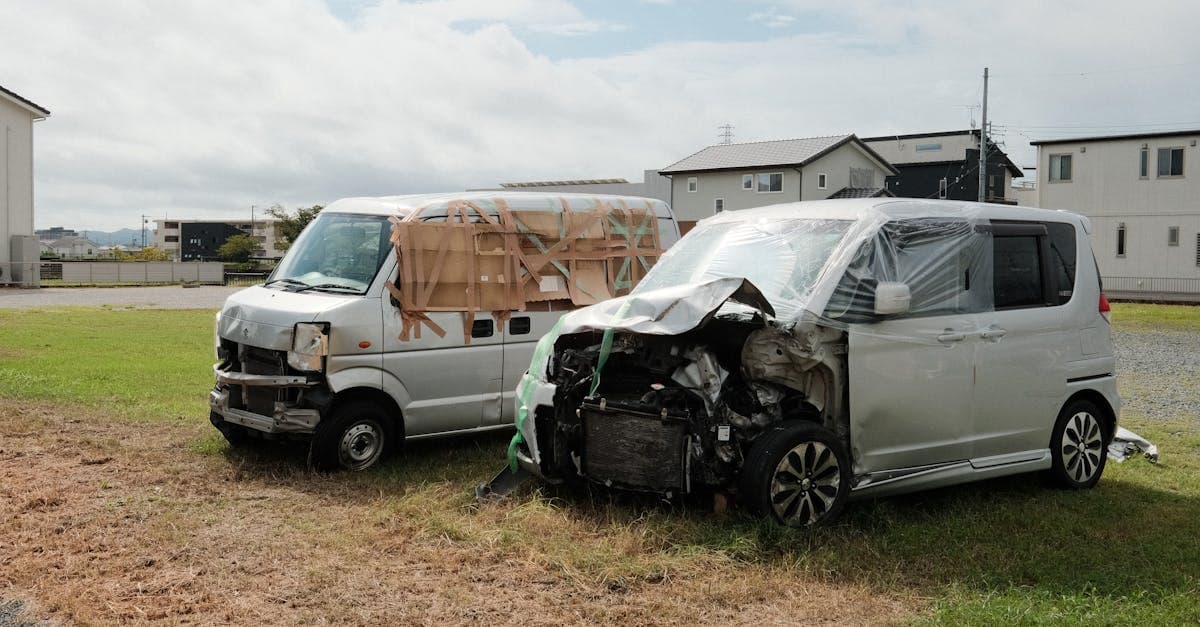
You are driving through an intersection when another driver runs a red light and slams into your passenger side. The damage is extensive — crumpled door panels, broken glass, deployed airbags. The repair estimate comes in at $12,000. Without collision insurance, that entire amount comes out of your pocket while you wait months for the other driver's insurance to settle.
Let's break this down further. With collision coverage, the process is different. You file a claim with your own insurer, pay your $500 deductible, and receive $11,500 toward repairs. Your insurer then pursues the at-fault driver's insurance through subrogation to recover their costs — and often your deductible as well.
This scenario illustrates why collision insurance exists: it is the regrowth that follows the storm of vehicle damage. It gets your vehicle repaired quickly using your own coverage rather than waiting for a potentially lengthy liability claim against the other driver. If you caused the accident yourself, collision coverage is even more critical — the other driver's insurance will not pay for your vehicle damage at all.
Collision insurance covers damage from a wide range of impact events: hitting another vehicle, striking a stationary object like a pole or guardrail, rolling your vehicle, or driving into a ditch. It applies whether the accident happens on a highway, a residential street, or a parking lot. The consistent thread is physical contact between your vehicle and another object or surface.
Understanding what collision insurance covers — and equally important, what it does not — helps you make informed decisions about this significant component of your auto insurance premium.
Collision vs Comprehensive: Understanding the Difference
Here is a simple way to remember this. Collision and comprehensive coverage are the two components of physical damage protection for your vehicle. Together they are the thick bark that protects your financial tree from collision impact, but they cover very different types of loss.
Collision covers impact events — your vehicle hitting another vehicle or object. The defining characteristic is that the damage results from a collision, whether you caused it or not. Collision applies on roads, in parking lots, and in driveways.
Comprehensive covers everything else — theft, vandalism, fire, natural disasters, animal strikes, falling objects, glass breakage, and civil disturbance. The defining characteristic is that the damage comes from something other than a collision with a vehicle or object.
Different deductibles are possible. You can choose different deductible amounts for collision and comprehensive. Many drivers carry a higher collision deductible and a lower comprehensive deductible because comprehensive claims tend to be smaller and more frequent in some areas.
Different risk profiles apply. Your collision risk depends primarily on how much and where you drive. Your comprehensive risk depends more on where you park and live — areas with high theft, severe weather, or large animal populations carry higher comprehensive risk.
Full coverage means both. When people refer to full coverage auto insurance, they typically mean liability plus collision plus comprehensive. Neither collision nor comprehensive alone provides complete physical damage protection — you need both to cover the full range of potential vehicle damage. Lenders and lease companies typically require both coverages as a condition of financing.
Filing a Collision Claim: Step by Step
Let's break this down further. Knowing the collision claim process before you need it reduces stress and helps you receive your full entitled payout. The process is the regrowth that follows the storm of vehicle damage in action — here is how it unfolds.
Step 1: Ensure safety and document the scene. After any collision, move to safety if possible. Call 911 if anyone is injured. Take photos of all vehicles involved, damage to each vehicle, the accident scene, road conditions, traffic signs, and any visible injuries. Exchange insurance information with other drivers.
Step 2: File a police report. Many insurers require a police report for collision claims. Even when not required, a police report provides objective documentation that supports your claim. Request the report number before leaving the scene.
Step 3: Contact your insurer promptly. Report the collision to your insurer as soon as possible — ideally the same day. Provide the basic facts: when, where, what happened, who was involved, and the police report number. Your insurer will assign a claims adjuster.
Step 4: Get a damage assessment. Your insurer will arrange for a damage inspection — either at a specified location, through a mobile adjuster who comes to you, or via photos you submit through the insurer's app. The adjuster creates a repair estimate.
Step 5: Choose a repair shop. Your insurer may recommend preferred shops that offer guaranteed work and streamlined billing. You generally have the right to choose any licensed shop, though using a non-preferred shop may require additional coordination.
Step 6: Authorize repairs and pay your deductible. Once the estimate is approved, authorize repairs. You pay your deductible directly to the repair shop. If the shop discovers additional damage during repairs, the adjuster will issue a supplement to cover the extra cost.
Collision Insurance and Vehicle Modifications
Think of it this way. Standard collision insurance covers your vehicle in its factory configuration. Aftermarket modifications — performance parts, custom wheels, lifted suspensions, audio systems — may not be covered unless you take specific steps.
What standard collision covers: Your base policy covers factory-installed equipment and the vehicle's standard configuration. The actual cash value calculation reflects the stock vehicle's market value. Any aftermarket additions are typically excluded from the base collision coverage.
The modification gap: If you have invested $8,000 in aftermarket wheels, a suspension lift, and a custom audio system, those modifications are not reflected in the standard ACV calculation. In a total loss, you lose the vehicle and your $8,000 investment with no reimbursement.
Custom equipment coverage: Most insurers offer a custom equipment or aftermarket parts endorsement that extends collision and comprehensive coverage to modifications. These endorsements let you specify the value of your modifications, and the insurer includes that value in claim payouts. Premiums for custom equipment coverage are modest relative to the protection.
Documentation is essential. Keep receipts, installation records, and photos of all aftermarket modifications. This documentation supports your claim if modifications are damaged or destroyed in a collision. Without proof of what was installed and what it cost, recovering fair value is difficult.
Disclosure matters. Some modifications — particularly performance enhancements — can affect your collision premium or even your eligibility for coverage. Significant changes to your vehicle's horsepower, ride height, or intended use should be disclosed to your insurer. Failure to disclose can result in claim denial if the modification is discovered during the claims process.
Collision Insurance for Teen Drivers: What Parents Need to Know
Here is a simple way to remember this. Adding a teen driver to your auto policy dramatically increases collision insurance costs because teenage drivers have the highest accident rate of any age group. Managing this cost while maintaining the thick bark that protects your financial tree from collision impact requires strategic planning.
The cost reality: Adding a 16-year-old driver can increase your collision premium by 50 to 100 percent or more. Teen drivers account for a disproportionate share of collision claims, and insurers price this elevated risk into the premium. Male teens typically face even higher surcharges than female teens.
Good student discounts offer meaningful savings — typically 10 to 25 percent — for teens maintaining a B average or better. This is one of the most impactful discounts available for young drivers and should be documented each semester.
Driver education discounts provide 5 to 15 percent savings for teens who complete an approved driver education course. Some states require completion of specific programs for the discount to apply. The safety benefits complement the financial savings.
Vehicle assignment matters. Insurers rate teen drivers based on the vehicle they primarily drive. Assigning your teen to the least expensive vehicle on your policy — typically the oldest car with the lowest value — minimizes the collision premium impact. Insuring a teen on a new SUV costs dramatically more than on a ten-year-old sedan.
Telematics and usage-based programs monitor driving behavior and reward safe habits with discounts. These programs are particularly valuable for teen drivers because they incentivize safe driving and can produce discounts of 10 to 30 percent based on actual driving data.
Higher deductible strategy: Consider carrying a higher collision deductible on the vehicle your teen drives. This reduces the premium impact while maintaining coverage for serious damage that would be financially devastating.
What Collision Insurance Actually Covers
Let's break this down further. Collision insurance is the deep roots that keep your finances grounded after the collision shakes everything. It specifically covers damage to your own vehicle resulting from impact with another vehicle or object. The scope is clearly defined and includes several common accident scenarios.
Vehicle-to-vehicle collisions are the most obvious covered event. Whether you rear-end another car, are hit at an intersection, or are sideswiped on the highway, collision coverage pays for your vehicle's repairs regardless of who is at fault. This applies to accidents with cars, trucks, motorcycles, and any other motor vehicle.
Single-vehicle accidents are equally covered. Hitting a guardrail, telephone pole, tree, curb, or any stationary object triggers collision coverage. Driving into a ditch, rolling your vehicle, or running off the road also qualifies. The key element is impact — your vehicle struck something.
Pothole and road debris damage that results from a collision event is covered. If you hit a pothole that damages your suspension or rim, collision coverage applies because your vehicle impacted an object. Similarly, striking debris on the roadway is a collision event.
Parking lot incidents including backing into posts, being hit by another vehicle while parked, and door-opening damage caused by your vehicle's motion fall under collision coverage. Parking lot claims are among the most frequently filed collision claims in the United States.
The common thread across all covered events is physical impact between your vehicle and another object or surface. If the damage results from something other than impact — such as theft, vandalism, fire, or weather — it falls under comprehensive coverage instead.
Subrogation: How You May Get Your Deductible Back
Let's break this down further. When you file a collision claim for an accident caused by another driver, your insurer pays your claim and then pursues the at-fault driver or their insurance company to recover their costs. This process is called subrogation, and it can also recover your deductible.
How subrogation works: After paying your collision claim, your insurer sends a demand to the at-fault driver's insurer for reimbursement. If successful, the at-fault insurer repays your insurer for the full claim amount, including your deductible. Your insurer then refunds your deductible to you.
Timeline expectations: Subrogation can take weeks to months depending on whether fault is disputed, whether the other driver is insured, and how cooperative their insurer is. Simple rear-end collisions with clear fault typically resolve quickly. Complex multi-vehicle accidents with disputed fault take longer.
Partial recovery scenarios: If fault is shared — say 70/30 — your insurer may recover only 70 percent of the claim. In this case, you would receive 70 percent of your deductible back. The remaining 30 percent reflects your share of fault.
When subrogation fails: If the at-fault driver is uninsured and has no assets, subrogation may recover nothing. Your insurer absorbs their loss and you do not get your deductible back. This scenario underscores why uninsured motorist coverage is valuable alongside collision coverage.
Your role in subrogation: Cooperate with your insurer's subrogation team by providing accurate accident details, police reports, and any evidence you have. Your cooperation helps maximize recovery and increases the likelihood of getting your deductible returned.
Does Your Collision Insurance Cover Rental Cars?
Think of it this way. Before paying for collision damage waiver at the rental counter, check whether your existing auto insurance already provides the protection you need. Many drivers are already covered and overpay for duplicate rental car protection.
Personal auto policy extension: Most personal auto insurance policies extend collision coverage to rental cars. If you carry collision on your personal vehicle, that same coverage typically applies when you rent a car in the United States. The same deductible applies.
What is covered: Your collision coverage on a rental works the same as on your own vehicle — damage from impact with another vehicle or object. If you crash the rental car, your collision coverage pays for the damage minus your deductible.
Important limitations: Coverage typically applies only to standard passenger vehicles rented for personal use. Exotic cars, trucks over a certain weight, motorcycles, and recreational vehicles are often excluded. Rentals for business purposes may also fall outside personal policy coverage.
International rentals: Personal auto policies generally do not extend to rentals outside the United States and Canada. If you are renting internationally, you typically need to purchase the rental company's coverage or use a credit card that provides international rental coverage.
Credit card collision benefits: Many premium credit cards offer rental car collision coverage as a cardholder benefit. Coverage varies — some cards provide primary coverage while others provide secondary coverage that pays only after your personal insurance. Read the card's benefit terms carefully and understand whether coverage is primary or secondary before relying on it.
The informed decision: At the rental counter, know whether your personal policy covers rental cars, what your deductible is, and whether your credit card provides additional coverage. This knowledge prevents you from paying $15 to $30 per day for coverage you already have.
Diminished Value After a Collision: The Hidden Loss
Here is a simple way to remember this. Even after professional repairs, a vehicle that has been in a collision is worth less than an identical vehicle that has not. This loss of value — called diminished value — is a real financial consequence that collision insurance does not automatically cover.
What diminished value means: When you eventually sell or trade your vehicle, its accident history reduces its market value. Buyers and dealers pay less for vehicles with collision history on their Carfax or AutoCheck reports. This reduction can range from 5 to 25 percent of the vehicle's pre-accident value depending on the severity of damage and the vehicle's age.
Types of diminished value: Inherent diminished value is the automatic loss that comes from the accident being on record, even with perfect repairs. Repair-related diminished value results from imperfect repairs — mismatched paint, slight misalignment, or other visible evidence of prior damage. These losses compound for newer and higher-value vehicles.
Can you claim diminished value? In most states, you can pursue a diminished value claim against the at-fault driver's insurance (not your own). Georgia is the only state that explicitly requires your own insurer to pay diminished value under your collision coverage. In other states, diminished value claims are typically third-party claims filed against the at-fault party.
How to document diminished value: Get a professional diminished value appraisal from an independent appraiser. This report documents your vehicle's pre-accident value, the accident details, and the estimated post-repair loss in value. Present this appraisal to the at-fault driver's insurer as the basis for your claim.
Practical expectations: Diminished value claims are most viable for newer vehicles with significant damage. A two-year-old luxury sedan with structural damage may have a strong diminished value claim. A ten-year-old economy car with a minor fender repair may not have a viable claim.
The Consumer's Collision Coverage Bill of Rights
As a collision insurance consumer, you have rights and options that insurers do not always proactively communicate. Knowing them ensures you receive fair treatment and full value from your coverage.
You have the right to choose your repair shop. Despite insurer preferences, you are not required to use their recommended shops in most states. Choose a shop you trust that has experience with your vehicle type.
You have the right to challenge valuations. If your insurer's actual cash value determination seems low, present comparable vehicle data and request a review. Insurers regularly adjust valuations when challenged with solid evidence.
You have the right to OEM parts. In many states, you can request original manufacturer parts for your repair. You may pay a difference in some cases, but the option should be presented to you.
You have the right to a fair claims process. Insurers must handle claims promptly and in good faith. If you experience unreasonable delays, low-ball offers, or unfair treatment, file a complaint with your state's insurance department.
You have the right to shop freely. Compare rates regularly. An insurer that was cheapest three years ago may not be cheapest today. Loyalty does not guarantee the best rate — active comparison does.
Know your rights, exercise them, and your collision coverage will serve you well.
Continue reading

How to Compare Home Insurance Quotes Without Getting Confused
Home insurance quotes can be overwhelming with their coverage categories, endorsement options, and pricing variables. A structured comparison approach cuts through the complexity and reveals the best option.
How Often Should You Really Review Your Insurance Policies?
Annual reviews are the minimum, but major life events, market changes, and claim experiences should trigger additional reviews. Understanding the right frequency prevents both over-reviewing and under-reviewing.

Assignment of Benefits Reform: What New Laws Mean for Policyholders
Several states have passed AOB reform laws that add consumer protections including rescission periods, notice requirements, and limits on attorney fees. These reforms change the AOB landscape.