The True Cost of Flood Damage Without Flood Insurance

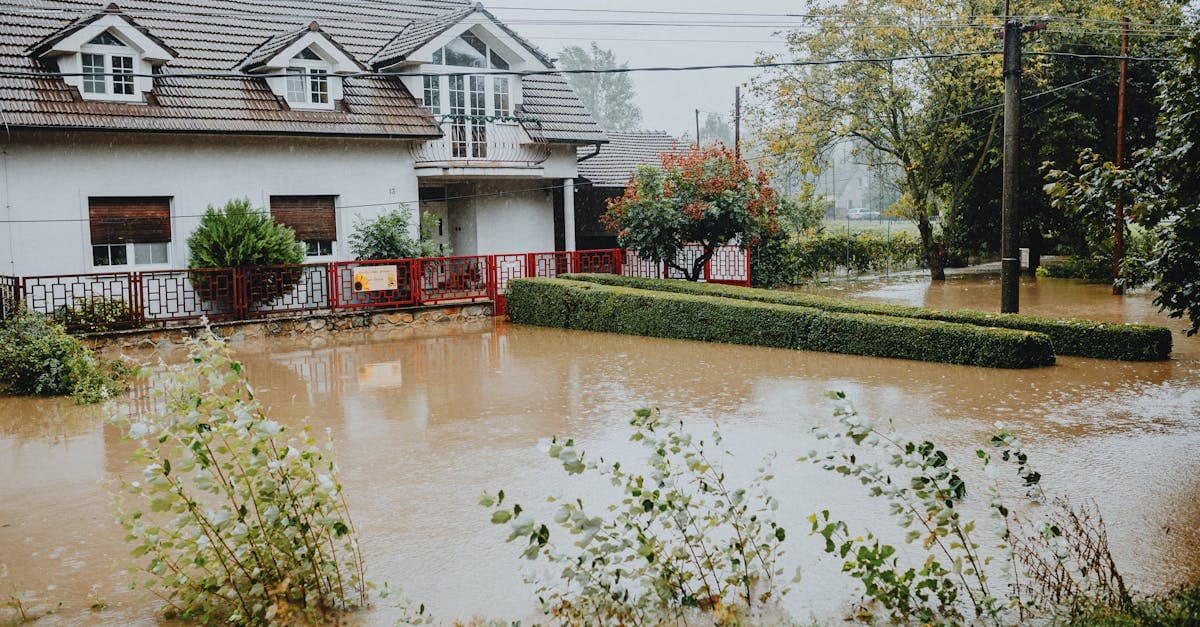
Three days of steady rain have saturated the ground across your entire neighborhood. On the fourth morning, water begins pooling in the streets. By noon, it has risen above the curb and is flowing across your front yard. By evening, four inches of floodwater covers your ground floor. Your furniture, flooring, drywall, and electrical outlets are all damaged.
Let's break this down further. You call your homeowners insurance company to file a claim. The adjuster arrives, documents the damage, and then delivers the news: your claim is denied. The flood exclusion in your homeowners policy means none of this damage is covered. Not the $8,000 in new flooring. Not the $12,000 in drywall and paint. Not the $4,000 in electrical work. Not the $6,000 in damaged furniture. The total exceeds $35,000, and every cent is your responsibility.
Your neighbor across the street had the same flooding, the same damage, and the same homeowners insurance exclusion. But she also had a separate flood insurance policy through the NFIP. Her claim is paid within weeks. This is planting deep-rooted coverage in the floodplain of your financial life so that rising water nourishes recovery instead of drowning equity.
This scenario happens thousands of times every year across America. Homeowners who assumed their policy covered floods discover the exclusion at the worst possible time — when they are standing in a damaged home with no financial safety net.
The National Flood Insurance Program: How It Works for Homeowners
Let's break this down further. The NFIP was created in 1968 to provide flood insurance that private markets refused to offer. Understanding how this federal program works helps homeowners navigate their primary option for closing the flood coverage gap.
Program structure: The NFIP is administered by FEMA but policies are sold and serviced through approximately 50 participating private insurance companies called Write Your Own carriers. You purchase an NFIP policy through your insurance agent, but the coverage is backed by the federal government.
Building coverage: NFIP residential policies offer building coverage up to $250,000. This covers the physical structure of your home including foundation walls, electrical and plumbing systems, HVAC equipment, permanently installed features like cabinets and built-in appliances, and debris removal.
Contents coverage: Separate contents coverage up to $100,000 protects personal property including furniture, clothing, electronics, and portable appliances. Building and contents coverage are purchased separately — having one does not automatically include the other.
What NFIP does not cover: NFIP policies exclude certain items including outdoor property, landscaping, currency, precious metals, and damage caused by moisture or mold that could have been prevented by the property owner. Below-grade coverage is more limited, excluding finished improvements like carpet, drywall, and paneling in basements.
Deductible options: NFIP policies offer deductibles ranging from $1,000 to $10,000 for building coverage and $1,000 to $10,000 for contents coverage. Higher deductibles reduce annual premiums but increase your out-of-pocket cost when filing a claim.
The waiting period: NFIP policies have a standard 30-day waiting period between purchase and the start of coverage. Exceptions exist for new mortgage loans and map revision changes, but in most cases, you must purchase 30 days before a flood to be covered.
Eligibility: NFIP flood insurance is available to homeowners, renters, and business owners in communities that participate in the NFIP. Most communities in the United States participate, making NFIP coverage widely available.
FEMA Flood Zones and What They Mean for Your Insurance
Think of it this way. FEMA flood zone designations affect your flood insurance requirements, premiums, and risk awareness. Understanding these zones helps you evaluate your flood exposure and coverage needs.
High-risk zones (A and V): Zone A and its variants (AE, AH, AO, AR, A99) indicate areas with a 1 percent or greater annual chance of flooding — often called the 100-year floodplain. Zone V and VE are coastal high-risk zones with additional wave action hazard. Flood insurance is mandatory for federally backed mortgages in these zones.
Moderate-risk zones (B and Shaded X): Zone B and Shaded Zone X indicate areas with a 0.2 percent annual chance of flooding — the 500-year floodplain. Flood insurance is not required by lenders but is recommended. NFIP Preferred Risk Policies are available at reduced rates.
Low-risk zones (C and Unshaded X): Zone C and Unshaded Zone X indicate minimal flood risk areas outside the 500-year floodplain. Flood insurance is not required but is available. More than 25 percent of flood claims come from these supposedly low-risk areas.
How zones affect premiums: Your flood zone directly influences your premium. High-risk zone properties pay higher rates, while moderate and low-risk zone properties may qualify for Preferred Risk Policies at significantly lower premiums. Under Risk Rating 2.0, individual property characteristics also affect pricing within zones.
Zone changes and reclassification: FEMA periodically updates flood maps, and your property's zone can change. Reclassification from a low-risk to a high-risk zone triggers mandatory insurance requirements and potentially higher premiums. Purchasing flood insurance before reclassification may preserve lower rates.
The critical reminder: Your FEMA flood zone affects your flood insurance requirements and pricing, but it does not affect the flood exclusion in your homeowners policy. Your homeowners insurance excludes flood damage whether you are in Zone A, Zone X, or any other designation. The flood exclusion is universal.
Flood Mitigation: Reducing Your Risk Beyond Insurance Coverage
Let's break this down further. While flood insurance provides financial protection after flooding, physical mitigation measures reduce the likelihood and severity of flood damage. The most effective strategy combines insurance with prevention.
Proper grading and drainage: Ensure the ground slopes away from your foundation at a minimum of one inch per foot for the first six feet. Proper grading directs surface water away from your home and reduces foundation flooding risk.
Gutter and downspout maintenance: Clean gutters and extend downspouts at least four to six feet from your foundation. Properly functioning gutters and downspouts prevent concentrated water accumulation at the base of your home.
Sump pump with battery backup: A sump pump system actively removes water that collects in your basement or crawl space. A battery backup ensures the pump continues operating during power outages — which often coincide with the severe storms that cause flooding.
Foundation waterproofing: Seal foundation cracks with hydraulic cement or epoxy injection. Apply waterproof coatings to exterior foundation walls. These measures reduce the amount of water that penetrates below grade during heavy saturation.
Backflow prevention valves: Install a backflow valve on your sewer line to prevent sewage and stormwater from backing up into your basement through floor drains. These valves are relatively inexpensive and prevent one of the most common and unpleasant types of basement water intrusion.
Elevate critical systems: Where feasible, elevate furnaces, water heaters, electrical panels, washers, and dryers above potential flood levels. Elevating these expensive systems reduces the financial impact of flooding even if water enters your home.
Flood insurance premium discounts: Some mitigation measures, including elevation above the base flood elevation and community flood mitigation programs, can reduce your flood insurance premiums. Ask your agent about available discounts for mitigation improvements.
How Much Does Flood Insurance Cost? A Breakdown for Homeowners
Let's break this down further. Understanding flood insurance pricing helps homeowners evaluate whether separate coverage is financially practical — because planting deep-rooted coverage in the floodplain of your financial life so that rising water nourishes recovery instead of drowning equity.
NFIP pricing factors: Under Risk Rating 2.0, NFIP premiums are calculated based on flood frequency, flood types your property faces, distance to the nearest water source, property elevation, replacement cost of the building, and the building's characteristics including foundation type and first floor height.
Preferred Risk Policy pricing: Homes in FEMA moderate and low-risk zones may qualify for the NFIP Preferred Risk Policy with annual premiums ranging from approximately $300 to $600 for combined building and contents coverage. These are among the most affordable insurance products available relative to the protection they provide.
Standard risk pricing: Homes in FEMA high-risk zones pay standard NFIP rates that vary widely based on property-specific factors. Annual premiums can range from $500 to several thousand dollars depending on the property's risk profile.
Private flood insurance pricing: Private flood insurers use their own risk models and may price competitively with or differently from the NFIP. For lower-risk properties, private insurers sometimes offer lower premiums with broader coverage. For higher-risk properties, NFIP rates may be more favorable.
Deductible impact on cost: Choosing a higher deductible reduces your annual premium. An NFIP policy with a $5,000 deductible costs less than the same policy with a $1,000 deductible. The trade-off is higher out-of-pocket costs when filing a claim.
The cost-benefit calculation: Compare your annual premium against the potential cost of flood damage. If your premium is $500 per year and the average flood claim exceeds $30,000, the insurance pays for itself many times over with a single claim. Even 30 years of premiums at $500 total $15,000 — far less than one significant flood event.
Premium trends: FEMA's transition to Risk Rating 2.0 is gradually adjusting premiums to reflect individual property risk. Annual increases are capped at 18 percent for most policyholders, allowing gradual transition to actuarially appropriate rates.
Flood Insurance for Condo Owners and Renters
Think of it this way. The homeowners insurance flood exclusion also appears in condo and renters insurance policies. Understanding how flood coverage works for these property types ensures that condo owners and renters are not caught without protection.
Condo master flood policies: Your condo association may carry an NFIP or private flood policy on the building structure. This master policy covers the building's common elements and structural components. However, it typically does not cover individual unit improvements or personal property inside your unit.
Individual condo flood coverage: Condo owners can purchase individual NFIP flood policies that cover interior improvements within their unit — built-in fixtures, flooring, cabinets, and appliances you installed — plus personal property. This individual coverage fills the gap between the master policy and your total exposure.
Renters flood insurance: Renters can purchase NFIP contents-only flood policies to protect personal belongings. Renters insurance excludes flood damage just like homeowners insurance, so renters in flood-prone areas need this separate coverage to protect furniture, electronics, clothing, and other possessions.
Coverage coordination: For condo owners, the relationship between the building master flood policy, your individual flood policy, and your condo insurance policy (HO-6) requires careful coordination. Ensure there are no gaps where flood damage to your unit falls between coverages.
Cost for condo and renter policies: Contents-only flood policies for renters and supplemental condo flood policies are generally less expensive than full building and contents policies because they cover a smaller scope. Annual premiums for contents-only coverage may be quite modest.
The key takeaway: Whether you own a house, own a condo, or rent, your standard insurance policy excludes flood damage. The specific flood insurance product varies by ownership type, but the need for separate flood coverage is universal for anyone with flood exposure.
How Much Does Flood Insurance Cost? A Breakdown for Homeowners
Let's break this down further. Understanding flood insurance pricing helps homeowners evaluate whether separate coverage is financially practical — because planting deep-rooted coverage in the floodplain of your financial life so that rising water nourishes recovery instead of drowning equity.
NFIP pricing factors: Under Risk Rating 2.0, NFIP premiums are calculated based on flood frequency, flood types your property faces, distance to the nearest water source, property elevation, replacement cost of the building, and the building's characteristics including foundation type and first floor height.
Preferred Risk Policy pricing: Homes in FEMA moderate and low-risk zones may qualify for the NFIP Preferred Risk Policy with annual premiums ranging from approximately $300 to $600 for combined building and contents coverage. These are among the most affordable insurance products available relative to the protection they provide.
Standard risk pricing: Homes in FEMA high-risk zones pay standard NFIP rates that vary widely based on property-specific factors. Annual premiums can range from $500 to several thousand dollars depending on the property's risk profile.
Private flood insurance pricing: Private flood insurers use their own risk models and may price competitively with or differently from the NFIP. For lower-risk properties, private insurers sometimes offer lower premiums with broader coverage. For higher-risk properties, NFIP rates may be more favorable.
Deductible impact on cost: Choosing a higher deductible reduces your annual premium. An NFIP policy with a $5,000 deductible costs less than the same policy with a $1,000 deductible. The trade-off is higher out-of-pocket costs when filing a claim.
The cost-benefit calculation: Compare your annual premium against the potential cost of flood damage. If your premium is $500 per year and the average flood claim exceeds $30,000, the insurance pays for itself many times over with a single claim. Even 30 years of premiums at $500 total $15,000 — far less than one significant flood event.
Premium trends: FEMA's transition to Risk Rating 2.0 is gradually adjusting premiums to reflect individual property risk. Annual increases are capped at 18 percent for most policyholders, allowing gradual transition to actuarially appropriate rates.
Flood Insurance for Condo Owners and Renters
Think of it this way. The homeowners insurance flood exclusion also appears in condo and renters insurance policies. Understanding how flood coverage works for these property types ensures that condo owners and renters are not caught without protection.
Condo master flood policies: Your condo association may carry an NFIP or private flood policy on the building structure. This master policy covers the building's common elements and structural components. However, it typically does not cover individual unit improvements or personal property inside your unit.
Individual condo flood coverage: Condo owners can purchase individual NFIP flood policies that cover interior improvements within their unit — built-in fixtures, flooring, cabinets, and appliances you installed — plus personal property. This individual coverage fills the gap between the master policy and your total exposure.
Renters flood insurance: Renters can purchase NFIP contents-only flood policies to protect personal belongings. Renters insurance excludes flood damage just like homeowners insurance, so renters in flood-prone areas need this separate coverage to protect furniture, electronics, clothing, and other possessions.
Coverage coordination: For condo owners, the relationship between the building master flood policy, your individual flood policy, and your condo insurance policy (HO-6) requires careful coordination. Ensure there are no gaps where flood damage to your unit falls between coverages.
Cost for condo and renter policies: Contents-only flood policies for renters and supplemental condo flood policies are generally less expensive than full building and contents policies because they cover a smaller scope. Annual premiums for contents-only coverage may be quite modest.
The key takeaway: Whether you own a house, own a condo, or rent, your standard insurance policy excludes flood damage. The specific flood insurance product varies by ownership type, but the need for separate flood coverage is universal for anyone with flood exposure.
Private Flood Insurance: A Growing Alternative to the NFIP
Think of it this way. The private flood insurance market has expanded significantly in recent years, giving homeowners an alternative to the NFIP with potentially different coverage features, pricing, and claims handling.
Market growth: Advances in flood modeling technology and data analytics have enabled private insurers to assess and price flood risk at the individual property level. This has attracted new carriers into the flood insurance market, creating competition that benefits consumers.
Coverage advantages: Private flood policies may offer features the NFIP does not, including replacement cost coverage for contents instead of actual cash value, loss of use coverage for temporary living expenses during displacement, building coverage limits above the NFIP $250,000 cap, and broader basement and below-grade coverage.
Pricing differences: For some properties, private flood insurance premiums may be lower than comparable NFIP coverage. For others, particularly high-risk properties, NFIP rates may be lower due to federal subsidies. Comparison shopping between NFIP and private options is essential.
Shorter waiting periods: Some private flood insurers offer waiting periods shorter than the NFIP's 30 days, though this varies by carrier. Shorter waiting periods provide faster access to coverage after purchase.
Financial backing considerations: NFIP policies are backed by the federal government. Private flood policies are backed by the issuing insurance company and its reinsurers. Verify the financial strength rating of any private flood insurer before purchasing — you need confidence the company can pay claims after a widespread flood event.
Mortgage acceptance: Federal law requires lenders to accept private flood insurance that meets certain criteria for properties in high-risk zones. However, some lenders may still prefer NFIP policies. Verify that your lender will accept a private flood policy before switching from the NFIP.
The comparison process: Request quotes from both the NFIP through your agent and at least one private flood insurer. Compare not just premiums but coverage limits, deductibles, covered perils, exclusions, basement coverage, contents valuation method, and claims handling reputation.
Your Rights and Options for Flood Protection
As a consumer, you have the right to understand what your homeowners insurance covers and what it excludes. The flood exclusion is the most significant exclusion in your policy, and your insurer or agent should be willing to explain it clearly.
You also have options for closing the flood coverage gap. The NFIP provides flood insurance through participating insurers in most communities nationwide. Private flood insurers offer alternative products that may better suit your needs. You can compare both and choose the option that provides the best combination of coverage, price, and service.
If your insurance agent has not discussed flood coverage with you, bring it up at your next policy review. Ask specifically about the flood exclusion in your homeowners policy, your FEMA flood zone designation, the cost of an NFIP policy for your property, and whether private flood insurance alternatives are available.
The informed consumer makes insurance decisions based on complete information, not on assumptions about what their policy covers. Now that you understand the flood exclusion, you can make a deliberate decision about whether separate flood insurance belongs in your coverage portfolio. For most homeowners, the answer is yes.
Continue reading

How to Compare Home Insurance Quotes Without Getting Confused
Home insurance quotes can be overwhelming with their coverage categories, endorsement options, and pricing variables. A structured comparison approach cuts through the complexity and reveals the best option.

How Often Should You Really Review Your Insurance Policies?
Annual reviews are the minimum, but major life events, market changes, and claim experiences should trigger additional reviews. Understanding the right frequency prevents both over-reviewing and under-reviewing.

Assignment of Benefits Reform: What New Laws Mean for Policyholders
Several states have passed AOB reform laws that add consumer protections including rescission periods, notice requirements, and limits on attorney fees. These reforms change the AOB landscape.