The True Cost of Flood Damage Without Insurance Outside a High-Risk Zone

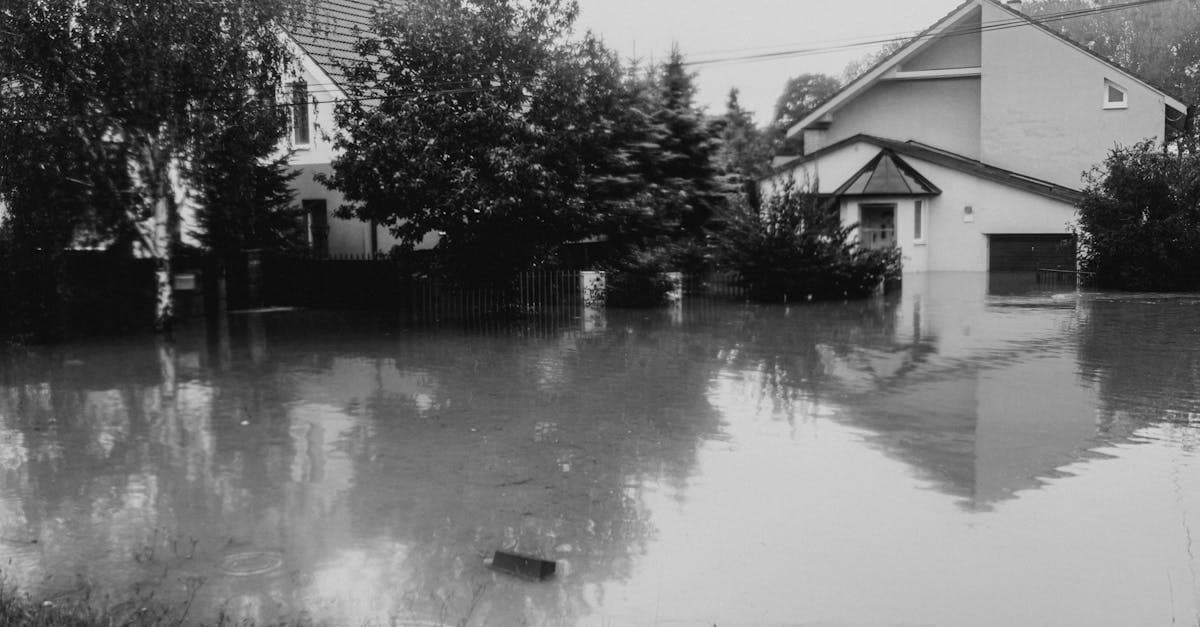
A powerful line of thunderstorms stalls over your suburban neighborhood for six hours on a Saturday afternoon. The storm drops eight inches of rain in a concentrated area. Storm drains overflow. Water backs up in the streets. And eventually, four inches of muddy floodwater enters your home through the front door, the garage, and the basement window wells.
Let's break this down further. Your home is in FEMA Zone X — a moderate to low-risk flood area. Your mortgage lender never required flood insurance. You assumed your homeowners policy would cover water damage. But your homeowners insurance adjuster confirms what the policy clearly states: flood damage is excluded. Every dollar of cleanup and repair comes from your savings.
The damage estimate arrives: $38,000. New flooring throughout the first floor. Drywall replacement up to four feet on every ground-level wall. Electrical outlet replacement. Baseboard and trim replacement. Appliance replacement. Professional water extraction and drying. Mold prevention treatment. This is cultivating protection against the natural water cycles that deliver flooding to every type of terrain over time.
This scenario plays out thousands of times every year across the country. Homes that were never supposed to flood get flooded. Homeowners who never thought they needed flood insurance discover they needed it desperately. And the financial impact is devastating because without flood insurance, there is no safety net for these losses.
NFIP Preferred Risk Policies: Affordable Flood Coverage for Lower-Risk Homes
Let's break this down further. The National Flood Insurance Program offers Preferred Risk Policies specifically designed for properties in moderate and low-risk flood zones. These policies provide meaningful flood protection at premium levels that make voluntary purchase a practical financial decision.
Eligibility requirements: Preferred Risk Policies are available for properties in FEMA Zone B, Zone C, Zone X, and Zone A99 — essentially any property not in a high-risk Zone A or Zone V. The property must not have experienced multiple flood claims, and the building must be eligible under NFIP guidelines.
Coverage options and limits: PRP policies offer building coverage up to $250,000 and contents coverage up to $100,000 — the same maximum limits available for any NFIP policy. Homeowners can select coverage amounts up to these limits based on their home's value and contents.
Premium affordability: PRP premiums are significantly lower than standard-risk NFIP premiums because the underlying risk is lower. Annual premiums for building and contents coverage combined often range from $300 to $700 depending on coverage amounts and deductible selections.
Deductible options: PRP policies offer deductible choices that affect premium levels. Higher deductibles reduce annual premiums but increase your out-of-pocket costs when filing a claim. Standard deductible options range from $1,000 to $10,000 for building coverage.
What PRP covers: Like all NFIP policies, Preferred Risk Policies cover direct physical damage to the building structure and contents caused by flooding — defined as a general and temporary condition where normally dry land is partially or completely inundated by water from overflow of inland or tidal waters, unusual and rapid accumulation of surface water runoff, or mudflow.
The value proposition: At a few hundred dollars per year, a PRP provides $250,000 in building protection against a peril that homeowners insurance completely excludes. The premium-to-coverage ratio makes voluntary flood insurance one of the most efficient risk management tools available to homeowners.
Risk Rating 2.0: FEMA's New Approach to Flood Insurance Pricing
Think of it this way. FEMA's Risk Rating 2.0 methodology represents the most significant change to flood insurance pricing since the NFIP's creation. Understanding this new approach helps homeowners outside high-risk zones anticipate how their premiums may be calculated.
What changed: Under the legacy rating system, flood insurance premiums were based primarily on the property's FEMA flood zone designation and the building's elevation relative to the base flood elevation. Risk Rating 2.0 incorporates a wider range of risk factors to calculate premiums that more accurately reflect individual property risk.
New risk factors considered: Risk Rating 2.0 evaluates flood frequency, flood type (fluvial, pluvial, coastal, storm surge), distance to the nearest water source, property elevation, building characteristics, and the cost to rebuild the structure. These factors produce premiums more closely tied to actual risk.
Impact on low-risk zone pricing: For properties outside high-risk zones, Risk Rating 2.0 may increase or decrease premiums compared to the legacy Preferred Risk Policy rates, depending on the individual property's risk profile. Properties closer to water sources or in areas with higher rainfall may see increases, while properties on higher ground with good drainage may see stable or lower rates.
Premium caps on increases: FEMA has implemented annual premium increase caps to prevent sudden large increases. NFIP premiums can increase by no more than 18 percent per year for most policyholders, allowing gradual adjustment to Risk Rating 2.0 pricing.
More equitable pricing: Risk Rating 2.0 is designed to produce more equitable pricing by charging premiums proportional to actual risk. Under the legacy system, some low-risk properties subsidized high-risk properties, and some high-risk properties paid less than their risk warranted.
The implication for voluntary purchasers: Homeowners outside high-risk zones who purchase flood insurance voluntarily can benefit from Risk Rating 2.0 pricing that reflects their lower risk level. Getting a quote under the new methodology is the best way to understand your current premium level.
The Long-Term Value of Flood Insurance Outside High-Risk Zones
Let's break this down further. Evaluating flood insurance as a long-term financial decision rather than a year-to-year expense reveals its true value proposition for homeowners outside high-risk zones. This perspective is cultivating protection against the natural water cycles that deliver flooding to every type of terrain over time.
Continuous protection over decades: Over a 30-year homeownership period, flood insurance provides continuous protection against an exclusion in your homeowners policy that could cost you tens of thousands of dollars. The cumulative premium cost is a fraction of a single flood damage event.
Rate lock benefits: Purchasing flood insurance before any flood zone reclassification locks in rates based on your current lower-risk designation. If FEMA updates maps and reclassifies your area to a higher-risk zone, existing policyholders may receive preferential treatment on rates.
No waiting period with continuous coverage: Maintaining continuous flood insurance coverage eliminates the 30-day waiting period that applies to new policies. If you let coverage lapse and repurchase later, you face another 30-day gap when you are unprotected.
Property value protection: Flood damage without insurance can diminish your home's value and complicate future sales. Buyers and their lenders may hesitate at properties with documented flood damage and no insurance history. Maintaining flood coverage protects your investment.
Community resilience contribution: When more homeowners in a community carry flood insurance, the community recovers faster from flood events. Individual insurance decisions collectively determine how quickly neighborhoods rebuild and how much public disaster assistance is needed.
The probability argument over time: A 0.2 percent annual flood probability may seem negligible, but over 30 years it accumulates to roughly a 6 percent chance. Over 50 years of homeownership, it approaches 10 percent. These are not trivial probabilities for an event that costs $25,000 or more — and the actual probability may be higher than FEMA's estimate.
Why Your Homeowners Insurance Does Not Cover Flood Damage
Let's break this down further. Understanding the flood exclusion in your homeowners insurance policy is essential because many homeowners discover it only after filing a claim — and by then it is too late. This exclusion is absolute and applies regardless of your flood zone designation.
The standard flood exclusion: Every standard homeowners insurance policy — HO-3, HO-5, and all common policy forms — contains a clear exclusion for flood damage. Flood is typically defined as a general and temporary condition of partial or complete inundation of normally dry land areas from overflow of inland or tidal waters, unusual and rapid accumulation or runoff of surface waters from any source, or mudflow.
What the exclusion means in practice: If floodwater enters your home through the front door, seeps through foundation walls, or rises from the ground up, your homeowners insurance pays nothing for the resulting damage. The structural damage, contents damage, and cleanup costs are entirely your responsibility without flood insurance.
Water damage that IS covered: Your homeowners policy does cover water damage from sudden internal events — a burst pipe, a failed water heater, an accidental overflow from a bathtub or washing machine. The distinction is the source: internal and accidental water damage is covered; external flooding is excluded.
The gray area with storm damage: Wind-driven rain that enters through openings created by storm damage — broken windows, missing shingles — may be covered under your homeowners policy as wind damage, not flood damage. But once water rises from the ground or flows in at ground level, the flood exclusion applies.
Sewer backup is separate too: Water that backs up through sewer drains or sump pump failures may be covered if you have a sewer backup endorsement on your homeowners policy. But this coverage is separate from flood insurance and covers a different water source with different policy terms and limits.
The practical takeaway: No amount of homeowners insurance protects you against flood damage. The only coverage that responds to rising water, surface runoff, and overflowing waterways is a standalone flood insurance policy — either through the NFIP or a private flood insurer.
Making the Decision: Is Flood Insurance Worth It for Your Home?
Think of it this way. Deciding whether to purchase flood insurance outside a high-risk zone is a personal financial decision that depends on your specific situation. This framework helps you evaluate the decision systematically — because cultivating protection against the natural water cycles that deliver flooding to every type of terrain over time.
Assess your actual risk: Look beyond your FEMA designation. Research local flood history. Check whether nearby properties have flooded. Evaluate your lot's drainage, elevation, and relationship to surrounding terrain. Consider recent development that may have changed water flow patterns.
Calculate your exposure: Estimate the potential cost of flood damage to your home. Consider the value of your ground-floor finishes, basement improvements, mechanical systems, and personal property. Even conservative estimates typically produce exposure figures of $20,000 to $50,000 or more.
Compare costs and benefits: A Preferred Risk Policy might cost $300 to $600 per year. Over 10 years, that is $3,000 to $6,000 in total premiums. One significant flood event costs $25,000 to $75,000 or more. The insurance pays for itself many times over with a single claim.
Consider your financial resilience: Could you absorb $25,000 to $50,000 in unexpected repair costs? Would that amount force you to deplete emergency savings, take on debt, or defer critical repairs? Homeowners with less financial cushion benefit most from the protection flood insurance provides.
Factor in the waiting period: NFIP policies have a 30-day waiting period. You cannot purchase flood insurance when a storm is approaching or after flooding begins. The decision to buy must be made proactively, during calm weather, well before any flood threat materializes.
Weigh peace of mind: Beyond the financial calculation, flood insurance provides certainty that a flooding event — however unlikely — will not create a financial crisis. For homeowners who value peace of mind and proactive risk management, the modest premium delivers significant psychological value.
Why Your Homeowners Insurance Does Not Cover Flood Damage
Let's break this down further. Understanding the flood exclusion in your homeowners insurance policy is essential because many homeowners discover it only after filing a claim — and by then it is too late. This exclusion is absolute and applies regardless of your flood zone designation.
The standard flood exclusion: Every standard homeowners insurance policy — HO-3, HO-5, and all common policy forms — contains a clear exclusion for flood damage. Flood is typically defined as a general and temporary condition of partial or complete inundation of normally dry land areas from overflow of inland or tidal waters, unusual and rapid accumulation or runoff of surface waters from any source, or mudflow.
What the exclusion means in practice: If floodwater enters your home through the front door, seeps through foundation walls, or rises from the ground up, your homeowners insurance pays nothing for the resulting damage. The structural damage, contents damage, and cleanup costs are entirely your responsibility without flood insurance.
Water damage that IS covered: Your homeowners policy does cover water damage from sudden internal events — a burst pipe, a failed water heater, an accidental overflow from a bathtub or washing machine. The distinction is the source: internal and accidental water damage is covered; external flooding is excluded.
The gray area with storm damage: Wind-driven rain that enters through openings created by storm damage — broken windows, missing shingles — may be covered under your homeowners policy as wind damage, not flood damage. But once water rises from the ground or flows in at ground level, the flood exclusion applies.
Sewer backup is separate too: Water that backs up through sewer drains or sump pump failures may be covered if you have a sewer backup endorsement on your homeowners policy. But this coverage is separate from flood insurance and covers a different water source with different policy terms and limits.
The practical takeaway: No amount of homeowners insurance protects you against flood damage. The only coverage that responds to rising water, surface runoff, and overflowing waterways is a standalone flood insurance policy — either through the NFIP or a private flood insurer.
Making the Decision: Is Flood Insurance Worth It for Your Home?
Think of it this way. Deciding whether to purchase flood insurance outside a high-risk zone is a personal financial decision that depends on your specific situation. This framework helps you evaluate the decision systematically — because cultivating protection against the natural water cycles that deliver flooding to every type of terrain over time.
Assess your actual risk: Look beyond your FEMA designation. Research local flood history. Check whether nearby properties have flooded. Evaluate your lot's drainage, elevation, and relationship to surrounding terrain. Consider recent development that may have changed water flow patterns.
Calculate your exposure: Estimate the potential cost of flood damage to your home. Consider the value of your ground-floor finishes, basement improvements, mechanical systems, and personal property. Even conservative estimates typically produce exposure figures of $20,000 to $50,000 or more.
Compare costs and benefits: A Preferred Risk Policy might cost $300 to $600 per year. Over 10 years, that is $3,000 to $6,000 in total premiums. One significant flood event costs $25,000 to $75,000 or more. The insurance pays for itself many times over with a single claim.
Consider your financial resilience: Could you absorb $25,000 to $50,000 in unexpected repair costs? Would that amount force you to deplete emergency savings, take on debt, or defer critical repairs? Homeowners with less financial cushion benefit most from the protection flood insurance provides.
Factor in the waiting period: NFIP policies have a 30-day waiting period. You cannot purchase flood insurance when a storm is approaching or after flooding begins. The decision to buy must be made proactively, during calm weather, well before any flood threat materializes.
Weigh peace of mind: Beyond the financial calculation, flood insurance provides certainty that a flooding event — however unlikely — will not create a financial crisis. For homeowners who value peace of mind and proactive risk management, the modest premium delivers significant psychological value.
Private Flood Insurance: An Alternative to the NFIP for Low-Risk Homes
Think of it this way. The private flood insurance market has expanded significantly in recent years, offering homeowners outside high-risk zones an alternative to the NFIP with potentially different coverage features, pricing, and claims handling.
Growing availability: Private flood insurers have entered the market in increasing numbers as data analytics and catastrophe modeling have improved their ability to assess and price flood risk at the individual property level. Many now compete aggressively for lower-risk properties.
Potential coverage advantages: Private flood policies may offer coverage features not available through the NFIP, including replacement cost coverage for contents, loss of use coverage during displacement, higher building coverage limits above the NFIP $250,000 cap, and coverage for basement improvements.
Pricing competition: For properties outside high-risk zones, private flood insurers may offer premiums competitive with or lower than NFIP Preferred Risk Policies. The competitive market benefits consumers by driving innovation in coverage and pricing.
Faster claims processing: Some private flood insurers market faster claims processing and payment timelines compared to the NFIP. For homeowners prioritizing rapid recovery after a flood, this can be a significant differentiator.
Important considerations: Private flood policies are backed by the issuing insurance company, not the federal government. Verify the insurer's financial strength rating and claims-paying history. Also review policy terms carefully — private policies may have different definitions of flooding, different exclusions, and different coverage structures than NFIP policies.
Comparing options: Request quotes from both the NFIP and one or more private flood insurers. Compare not just premiums but coverage limits, deductibles, covered perils, exclusions, and claims handling reputation. The best option depends on your specific property, coverage needs, and risk tolerance.
Your Consumer Rights and Flood Insurance Options
As a homeowner outside a high-risk zone, you have choices that high-risk zone homeowners do not. You can purchase flood insurance voluntarily, selecting coverage levels and deductibles that match your specific needs and budget. You are not locked into mandatory coverage requirements.
You have the right to shop between the NFIP and private flood insurers. You have the right to choose your coverage amounts and deductibles. You have the right to accurate information about your flood risk and insurance options. And you have the right to make an informed decision about whether to purchase coverage.
Your insurance agent should be able to explain the NFIP Preferred Risk Policy, compare it with private flood insurance options, and help you evaluate your specific risk factors. If your agent dismisses flood insurance for your property without a thorough analysis, seek a second opinion.
The most empowered homeowners are those who understand both the risk and the options. Flood risk exists outside high-risk zones. Affordable coverage is available. The decision to purchase is yours — make it with complete information.
Continue reading

How to Compare Home Insurance Quotes Without Getting Confused
Home insurance quotes can be overwhelming with their coverage categories, endorsement options, and pricing variables. A structured comparison approach cuts through the complexity and reveals the best option.

How Often Should You Really Review Your Insurance Policies?
Annual reviews are the minimum, but major life events, market changes, and claim experiences should trigger additional reviews. Understanding the right frequency prevents both over-reviewing and under-reviewing.

Assignment of Benefits Reform: What New Laws Mean for Policyholders
Several states have passed AOB reform laws that add consumer protections including rescission periods, notice requirements, and limits on attorney fees. These reforms change the AOB landscape.