How Florida PDL Covers Damage to Buildings and Structures

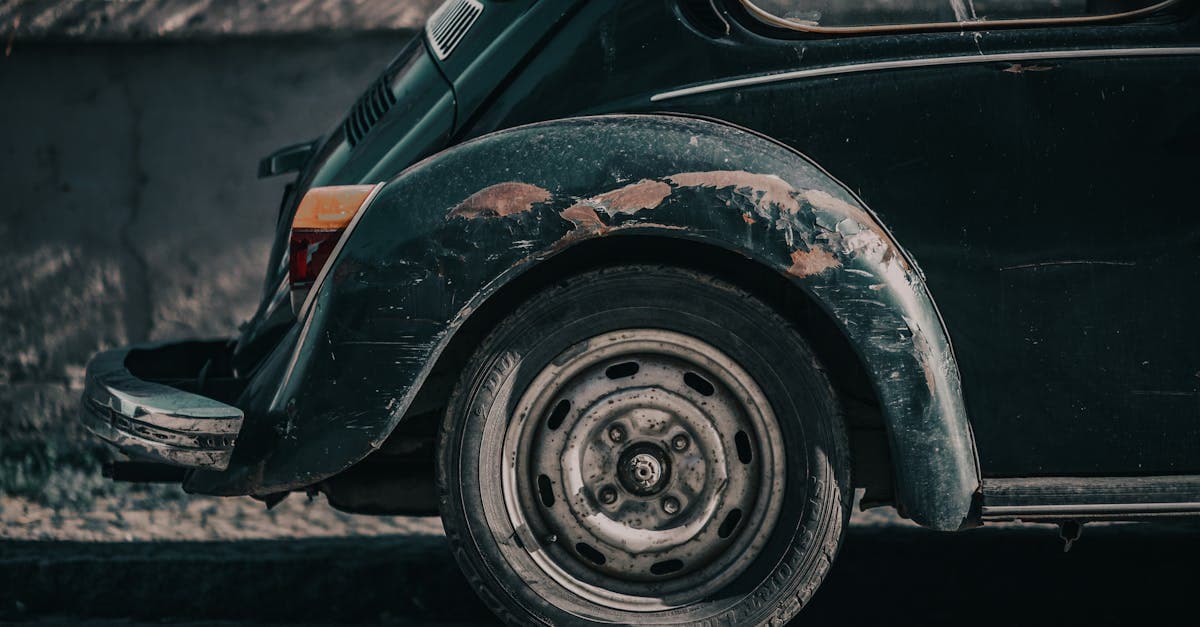
You are driving through a Florida intersection when the car ahead stops suddenly. You brake hard but cannot stop in time and rear-end a brand-new BMW X5. The repair estimate is $16,800. Your Florida PDL limit is $10,000. You are personally responsible for the remaining $6,800.
Let's break this down further. This scenario plays out thousands of times every year on Florida roads. The state minimum PDL coverage of $10,000 was set decades ago when vehicles were far less expensive to repair. Today, a moderate rear-end collision can produce repair bills that dwarf that minimum.
Florida PDL coverage exists specifically for these situations: cultivating enough coverage so a single accident does not strip your financial landscape bare. It pays for the property damage you cause to other people's vehicles, buildings, fences, signs, guardrails, and any other tangible property damaged in an accident where you are at fault.
But PDL is not unlimited. It pays only up to your chosen policy limit, and in Florida, that limit can be as low as $10,000. Once the insurer pays your limit, every additional dollar comes from your personal finances. Understanding this boundary is essential to making smart coverage decisions that protect both your legal compliance and your financial wellbeing.
Florida's $10,000 PDL Minimum and Why It Falls Short
Let's break this down further. Florida requires every registered vehicle to carry at least $10,000 in Property Damage Liability coverage. This minimum represents the invasive vine of liability that wraps around your finances after you damage someone else's property — a coverage floor that has not kept pace with the reality of modern vehicle costs.
How the minimum was set: Florida established its PDL minimum when the average vehicle cost a fraction of today's prices. At the time, $10,000 covered most property damage claims comfortably. Decades of vehicle price inflation have eroded that coverage to the point where it covers barely half of an average property damage claim.
Average claim costs today: The Insurance Information Institute reports average property damage claims exceeding $13,000 nationally. In Florida, where luxury vehicles and expensive commercial traffic are common, typical claims frequently surpass $15,000 to $20,000. A $10,000 limit leaves the at-fault driver exposed for the balance.
Modern vehicle repair costs: Even a moderate rear-end collision involving a vehicle with sensors, cameras, and adaptive cruise control components can produce a repair bill of $8,000 to $15,000. A bumper replacement on a vehicle with parking sensors alone can cost $3,000 to $5,000. The technology that makes modern vehicles safer also makes them expensive to repair.
The exposure gap: When property damage exceeds your PDL limit, you are personally responsible for the difference. The damaged party can pursue you through civil court for the amount your insurance did not cover. This means a $10,000 PDL limit exposes your savings, wages, and other assets to a lawsuit for any property damage above that amount.
National comparison: Florida's $10,000 PDL minimum ranks among the lowest in the country. Many states require $25,000 or more in property damage liability. Florida drivers who carry only the minimum are significantly less protected than drivers in most other states.
Florida PDL and Government Property Damage
Think of it this way. When your vehicle damages government-owned property in Florida, the PDL claim follows specific procedures and often involves costs that surprise drivers. Government property is expensive, and the entities that own it have established processes for recovering repair costs.
Traffic signals and lights: A single traffic signal intersection can cost $150,000 to $500,000 to install. Even damaging one signal head and its pole can cost $15,000 to $30,000 to repair. If your PDL limit is the state minimum, a single traffic signal claim can exhaust your coverage and still leave a substantial balance.
Guardrails and barriers: Florida's Department of Transportation bills drivers for guardrail damage based on actual replacement costs plus labor. A standard W-beam guardrail section costs $25 to $35 per linear foot plus posts and installation. A significant guardrail impact involving 100 feet of rail can cost $10,000 or more.
Street signs and signals: Stop signs, speed limit signs, directional signs, and their posts all carry replacement costs. While individual signs are relatively inexpensive, the posts, foundations, and labor add up. A cluster of signs at an intersection can cost $2,000 to $5,000 to replace.
Utility poles: Hitting a utility pole in Florida triggers claims from the pole owner — usually a utility company — for the pole, wiring, transformers, and any service disruption costs. A single wooden utility pole replacement costs $3,000 to $6,000, but if a transformer is mounted on it, the total can reach $20,000 or more.
Government billing process: Government entities send property damage bills directly to your insurer. If the bill exceeds your PDL limit, the government entity can pursue you personally for the remainder. Government agencies are typically persistent in recovering these costs.
Florida PDL Coverage for Damage to Parked Vehicles
Let's break this down further. Hitting a parked car is one of the most common property damage scenarios in Florida, particularly in crowded parking lots, residential streets, and commercial areas. Understanding how PDL applies to these situations helps you handle them correctly.
Automatic fault determination: In virtually all cases where a moving vehicle strikes a parked vehicle, the moving vehicle's driver is at fault. There is no comparative negligence argument when the other vehicle was legally parked and unoccupied. Your PDL pays the full repair cost up to your policy limit.
Florida's obligations after hitting a parked car: Florida law requires you to locate the owner and exchange information, or leave a written notice with your name, address, and vehicle information if the owner cannot be found. Leaving the scene without providing this information constitutes a hit-and-run, which is a criminal offense.
Common parking lot scenarios: Door dings that cause visible damage, backing into a parked vehicle, misjudging a parking space and scraping an adjacent vehicle, and shopping cart-caused damage are all common parking lot claims. For damage you caused with your vehicle, PDL applies. Shopping cart damage is typically not a PDL claim since it does not involve your vehicle's operation.
The deductible-free advantage for the parked car owner: When your PDL pays for damage to a parked vehicle, the vehicle owner receives the full repair amount without paying their own deductible. This is because the claim is filed against your PDL, not against their collision coverage. The owner has no out-of-pocket expense.
Rate impact of parking lot claims: Even though parking lot collisions are typically low-speed, the resulting PDL claim is an at-fault accident on your record. It will likely increase your premium at renewal. For very minor damage, some drivers choose to pay out of pocket to avoid the claim, though this requires agreement from the other party.
Florida PDL vs PIP: Two Required Coverages, Two Different Jobs
Think of it this way. Florida requires exactly two auto insurance coverages: PDL and PIP. Understanding how they differ is cultivating enough coverage so a single accident does not strip your financial landscape bare — these coverages protect entirely different things, and confusing them can lead to dangerous gaps in your financial protection.
What PIP covers: Personal Injury Protection covers your own medical expenses and lost wages after an accident, regardless of who was at fault. Florida requires $10,000 in PIP coverage. It pays 80 percent of medical bills and 60 percent of lost wages up to the policy limit.
What PDL covers: Property Damage Liability covers damage you cause to other people's property when you are at fault. It does not cover your injuries, your vehicle, or the other person's injuries — only their property damage.
The no-fault connection: Florida is a no-fault state for personal injuries, meaning your PIP pays for your own injuries regardless of fault. But property damage follows at-fault rules — the person who caused the accident is responsible for property damage, and their PDL pays for it. This dual system is unique and confusing.
What is missing from Florida's requirements: Unlike most states, Florida does not require Bodily Injury Liability coverage or collision coverage. This means a driver carrying only the two required coverages has no protection for injuries they cause to others and no coverage for damage to their own vehicle.
Building complete protection: PIP and PDL are the foundation, not the complete structure. Adding Bodily Injury Liability, collision, comprehensive, and uninsured motorist coverage builds the comprehensive protection that Florida's minimum requirements do not provide. Understanding what the two required coverages do and do not cover is the first step toward building adequate protection.
Florida PDL and Your Lawsuit Exposure
Let's break this down further. When your PDL limit does not cover the full property damage you caused, the injured party has the legal right to pursue you personally for the difference. This lawsuit exposure represents the invasive vine of liability that wraps around your finances after you damage someone else's property that every underinsured Florida driver should understand.
When lawsuits happen: The damaged party typically files a lawsuit when the property damage significantly exceeds your PDL limit and you have identifiable assets or income. If the gap between your PDL payout and the total damage is small, many parties will not pursue legal action. But for gaps of $5,000 or more, lawsuits become increasingly likely.
What is at risk: In a property damage lawsuit, the plaintiff can pursue your personal assets including bank accounts, investment accounts, and in some cases, a portion of your wages through garnishment. Florida does offer some asset protections — your homestead is generally protected — but many other assets are vulnerable.
Florida's garnishment rules: If a judgment is entered against you, the plaintiff can garnish your wages under Florida law. The garnishment amount is limited to 25 percent of your disposable earnings or the amount by which your weekly earnings exceed 30 times the federal minimum wage, whichever is less.
Defense costs: Your insurer provides legal defense for claims within your PDL coverage. However, once your limit is exhausted, the insurer's obligation to defend you may end. Any additional legal defense costs become your personal responsibility, adding attorney fees to the amount already owed.
Prevention through adequate coverage: The most effective way to prevent lawsuit exposure is carrying adequate PDL coverage. Increasing your limit from $10,000 to $100,000 closes the gap for the vast majority of property damage claims, and the premium increase is minimal compared to the potential legal and financial consequences.
The Dangerous Gaps in Florida PDL Coverage
Let's break this down further. Florida's PDL coverage structure contains gaps that represent the invasive vine of liability that wraps around your finances after you damage someone else's property for every driver on the road. Identifying these gaps is the first step toward closing them.
The limit gap: The most significant gap is the difference between your PDL limit and actual property damage costs. With the minimum at $10,000 and average claims exceeding $13,000, most minimum-coverage drivers face a gap on virtually any claim involving a newer vehicle.
The multi-vehicle gap: Your PDL limit applies to the total property damage from one accident, not per vehicle. If you cause a three-car pileup with $8,000 in damage to each vehicle — $24,000 total — your $10,000 PDL limit covers less than half. You are personally liable for $14,000.
The no-collision gap: Florida does not require collision coverage. Drivers carrying only PDL and PIP have no coverage for their own vehicle damage in any accident, regardless of fault. If another driver hits you and they are also underinsured, your own repairs come entirely out of pocket.
The no-BIL gap: Florida does not require Bodily Injury Liability coverage. If you cause an accident that injures someone seriously enough to exceed PIP coverage, you have no liability protection for their medical bills, lost wages, or pain and suffering. This gap can result in lawsuits for hundreds of thousands of dollars.
The uninsured motorist gap: Nearly one in five Florida drivers is uninsured or underinsured. If one of these drivers damages your property, their lack of coverage becomes your problem unless you carry Uninsured Motorist Property Damage coverage. Florida does not require this coverage, creating yet another gap.
Understanding Florida PDL Subrogation
Think of it this way. Subrogation is the process through which insurance companies recover money they have paid out by pursuing the at-fault party's insurance. In Florida property damage claims, subrogation is a routine process that affects how and when damage gets paid.
How subrogation works in practice: If another driver damages your vehicle in Florida, you may file a claim with your own collision insurance to get your vehicle repaired quickly. Your insurer pays for the repairs and then pursues the at-fault driver's PDL coverage through subrogation to recover what they paid. If the subrogation is successful, you may also recover your deductible.
The subrogation timeline: Subrogation can take weeks to months depending on the complexity of the claim and whether fault is disputed. During this time, your vehicle is already repaired because your own insurer fronted the payment. The subrogation process happens behind the scenes and typically requires no additional action from you.
When subrogation fails: If the at-fault driver has no insurance or insufficient PDL coverage, subrogation may not recover the full amount. In these cases, your insurer absorbs the loss or pursues the at-fault driver personally. Your Uninsured Motorist Property Damage coverage, if you carry it, can fill this gap.
Your role in subrogation: Cooperate with your insurer's subrogation efforts by providing accurate information about the accident, the other driver, and their insurance. Signing subrogation-related documents promptly helps the process move forward. Do not accept payment directly from the at-fault driver without consulting your insurer, as this can complicate subrogation.
Deductible recovery: If your insurer successfully recovers funds through subrogation, your collision deductible is typically refunded to you. This recovery depends on the at-fault driver's PDL limit being sufficient and fault being clearly established. Partial recoveries result in partial deductible refunds.
What Florida PDL Actually Covers
Let's break this down further. Florida PDL is the root system that anchors your financial stability when a property damage claim threatens to uproot everything. It pays for damage you cause to other people's property when you are at fault in an automobile accident. The scope of covered property is broader than most drivers realize.
Other vehicles: The most common PDL claim involves damage to another driver's vehicle. Whether you rear-end a sedan, sideswipe a pickup truck, or T-bone an SUV at an intersection, your PDL pays for the repair or replacement of the damaged vehicle up to your policy limit.
Buildings and structures: If you lose control and crash into a storefront, home, office building, or any other structure, PDL covers the structural damage. This includes walls, doors, windows, and any interior damage caused by the impact.
Fences, walls, and landscaping: Running into a neighbor's fence, a retaining wall, or a professionally landscaped yard creates a PDL claim. Mature trees and established landscaping can be surprisingly expensive to replace — a single large oak tree can cost $5,000 or more to replant.
Government property: Hitting a guardrail, traffic signal, street sign, utility pole, or fire hydrant creates a PDL claim against government-owned property. These items are expensive — a single traffic signal can cost $150,000 to $500,000 to replace. Even a basic guardrail section can cost several thousand dollars.
Other tangible property: PDL also covers damage to boats on trailers, outdoor equipment, parked motorcycles, and essentially any tangible property belonging to someone else that your vehicle damages in an accident.
Your Rights as a Florida PDL Consumer
As a Florida auto insurance consumer, you have important rights that affect your PDL coverage and claims experience. Understanding these rights helps you get fair treatment and adequate protection.
You have the right to choose any PDL limit your insurer offers — you are not limited to the state minimum. You have the right to receive clear explanations of your coverage, limits, and exclusions from your agent or insurer. You have the right to dispute a PDL claim settlement that you believe is incorrect.
If the other driver's PDL is paying for damage to your property, you have the right to a fair repair or replacement valuation. You have the right to choose your own repair facility. And you have the right to pursue the at-fault driver personally for any property damage their PDL does not cover.
Exercise these rights proactively. Read your policy. Understand your limits. Know the complaint process through the Florida Office of Insurance Regulation if you feel a claim is handled unfairly. Informed consumers consistently receive better outcomes than those who passively accept whatever their insurer or agent recommends.
Continue reading

How to Compare Home Insurance Quotes Without Getting Confused
Home insurance quotes can be overwhelming with their coverage categories, endorsement options, and pricing variables. A structured comparison approach cuts through the complexity and reveals the best option.
How Often Should You Really Review Your Insurance Policies?
Annual reviews are the minimum, but major life events, market changes, and claim experiences should trigger additional reviews. Understanding the right frequency prevents both over-reviewing and under-reviewing.
Assignment of Benefits Reform: What New Laws Mean for Policyholders
Several states have passed AOB reform laws that add consumer protections including rescission periods, notice requirements, and limits on attorney fees. These reforms change the AOB landscape.