Is Uninsured Motorist Coverage Worth It for Young Drivers?

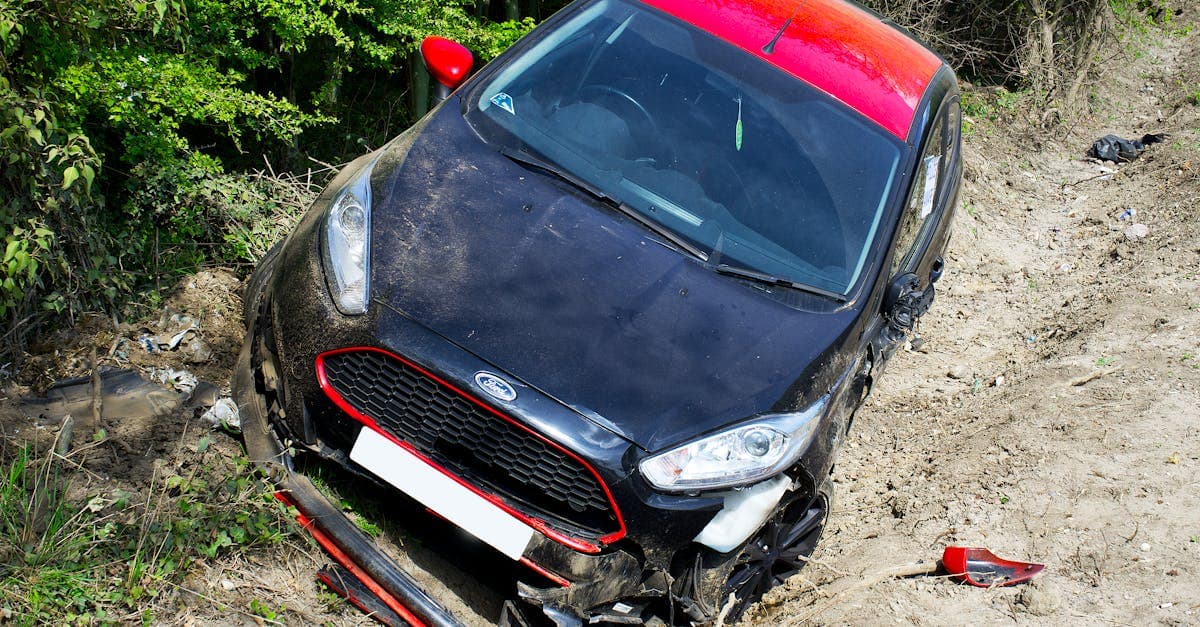
A distracted driver runs a red light and broadsides your car at forty miles per hour. You spend three days in the hospital with a broken pelvis and fractured wrist. The medical bills reach sixty-two thousand dollars. You miss eight weeks of work, losing fourteen thousand dollars in income. Your vehicle is totaled — another eighteen thousand dollars gone.
Let's break this down further. Then you learn the other driver has no insurance. No policy, no assets, no way to pay. Your total losses exceed ninety-four thousand dollars, and the person responsible has nothing.
If you have UM coverage, you file a claim with your own insurer. They pay your medical bills, your lost wages, compensation for pain and suffering, and your vehicle damage — up to your policy limits. If you do not have UM coverage, you absorb every dollar yourself.
This is weighing whether the seed of UM premium grows into protection worth its planting cost. The driver in this scenario paid roughly one hundred and fifty dollars per year for UM coverage. The single claim returned more than six hundred times the annual premium. Even if this driver had paid UM premiums for forty years without ever filing a claim, the total lifetime cost would still be less than seven percent of this one payout.
The worth of UM coverage becomes undeniable when you see the numbers from real accidents. The question is not whether you can afford UM coverage — it is whether you can afford to go without it.
UM Coverage Value State by State
Let's break this down further. The value of uninsured motorist coverage varies by state because uninsured driver rates differ dramatically across the country. Understanding your state's specific risk level helps you evaluate whether UM coverage is worth the premium you are paying.
Highest-risk states: Mississippi leads the nation with a 29.4 percent uninsured rate — nearly one in three drivers. New Mexico follows at 21.8 percent, Michigan at 25.5 percent, and Tennessee at 23.7 percent. In these states, UM coverage is exceptionally valuable because the probability of encountering an uninsured driver is two to three times the national average.
Moderate-risk states: States like Florida, Alabama, Washington, and Oklahoma have uninsured rates between 15 and 20 percent. The risk is well above the national average, and UM coverage provides strong value. Florida's combination of high uninsured rates and no-fault limitations makes UM coverage particularly important.
Lower-risk states: States like Massachusetts, New York, and Maine have uninsured rates below 7 percent. The risk is lower but not negligible — even a 5 percent rate means one in twenty drivers carries no insurance. UM coverage still provides meaningful value in these states, and premiums are typically lower to reflect the reduced risk.
Cost correlation: UM premiums generally track with state risk levels. High-risk states charge more for UM coverage, but the coverage is also more likely to be needed. Low-risk states charge less, making the coverage affordable even when the probability of needing it is lower. The value proposition remains favorable in both scenarios.
Interstate travel: If you regularly drive through high-risk states, your home state's uninsured rate understates your actual exposure. Commuters and travelers who cross state lines should consider their full geographic risk profile when evaluating UM coverage worth.
Is UM Coverage Worth It in Florida?
Think of it this way. Florida presents a particularly compelling case for UM coverage due to the state's high uninsured driver rate, no-fault system limitations, and specific UM rules that enhance the coverage's value.
Florida's uninsured driver rate: Florida consistently ranks among the top ten states for uninsured drivers, with rates hovering between 20 and 26 percent depending on the study and year. This means roughly one in four or five drivers on Florida roads carries no insurance. The probability of encountering an uninsured driver in an accident is dramatically higher in Florida than the national average.
PIP limitations that UM fills: Florida's mandatory PIP coverage caps at ten thousand dollars and covers only eighty percent of medical expenses. For any serious injury, PIP is exhausted quickly, leaving significant uncovered medical costs. UM coverage picks up where PIP stops, paying the remaining medical expenses plus lost wages and pain and suffering that PIP never covers.
Florida stacking benefits: Florida allows stacked UM coverage, which multiplies limits across vehicles on your policy. A Florida family with three vehicles and stacked one hundred thousand UM limits effectively has three hundred thousand in UM protection — a critical advantage given the state's high uninsured rate.
Florida's legal landscape: Florida courts have been protective of UM claimants' rights, making it easier to recover fair settlements. The state's UM statute includes provisions that benefit policyholders, including mandatory offer requirements and bad faith protections.
Florida-specific cost: UM coverage in Florida typically costs between one hundred and two hundred fifty dollars per year due to the higher risk environment. Even at the upper end, the coverage is worth it given that one in four drivers you share the road with may have no insurance at all.
The Peace of Mind Value of UM Coverage
Let's break this down further. Beyond the financial calculations, UM coverage provides psychological value that is difficult to quantify but real. Understanding this dimension completes the picture of whether the coverage is worth its cost.
Eliminating a worry: Drivers who carry UM coverage eliminate one significant source of financial anxiety. Knowing that an uninsured driver accident will not devastate your finances provides daily peace of mind that accumulates over years of driving.
Confidence in the claims process: UM policyholders know that if an uninsured driver hits them, they have a clear path to recovery — file a claim with their own insurer and receive compensation. Drivers without UM coverage face uncertainty, legal complexity, and the likelihood of unrecoverable losses.
Family security assurance: Parents who carry UM coverage know their children are protected whether riding in the family car, walking to school, or cycling in the neighborhood. This security extends to the entire household and covers situations most families never consider until an accident occurs.
Reduced post-accident stress: Accident aftermath is inherently stressful. Adding financial uncertainty to physical recovery compounds the stress dramatically. UM coverage removes the financial layer of stress, allowing accident victims to focus on physical and emotional recovery.
The value of not needing it: Paradoxically, UM coverage provides its peace-of-mind value most consistently when you never file a claim. Every day you drive without being hit by an uninsured motorist, you benefit from knowing you were protected. That daily benefit, accumulated over years, has real psychological worth that supplements the financial protection.
What You Lose Without UM Coverage
Think of it this way. To understand whether UM coverage is worth it, you need to understand exactly what happens when an uninsured driver hits you and you have no UM coverage. The losses are broader and deeper than most drivers realize.
Medical expenses you absorb: Your health insurance may cover medical bills, but it comes with deductibles, copays, coinsurance, and network limitations. A serious injury producing eighty thousand dollars in medical bills could leave you responsible for ten thousand to twenty thousand dollars in out-of-pocket costs even with good health insurance. Without health insurance, you absorb the entire amount.
Lost income with no replacement: If your injuries prevent you from working, you lose income during recovery. Short-term disability insurance, if you have it, typically replaces only sixty percent of your salary after a waiting period. UM coverage would pay full lost wages with no waiting period and no percentage reduction.
Pain and suffering with no compensation: No other insurance coverage compensates for pain and suffering. Not health insurance, not disability insurance, not collision coverage. Only UM coverage pays for the physical pain, emotional distress, and diminished quality of life caused by an uninsured driver accident. These non-economic damages often exceed the medical bills.
Vehicle damage deductible: Without UM property damage coverage, you pay your collision deductible to repair or replace your vehicle. With UMPD, the deductible may be lower or waived entirely, and your insurer may pursue the uninsured driver for reimbursement.
Legal costs with no recovery: You could sue the uninsured driver, but drivers without insurance rarely have assets to satisfy a judgment. You would spend money on legal fees pursuing someone who cannot pay.
Real Claim Scenarios That Show UM Coverage Worth
Let's break this down further. Abstract cost-benefit analysis is useful, but real-world claim scenarios bring the value of UM coverage into sharp focus. These examples are based on typical claim patterns and illustrate what happens with and without UM coverage.
Scenario one — rear-end collision: A driver is rear-ended at a stoplight by an uninsured driver traveling thirty-five miles per hour. Injuries include whiplash, two herniated discs, and a concussion. Medical bills total twenty-eight thousand dollars. Lost wages over six weeks of recovery equal eight thousand dollars. Pain and suffering compensation is valued at twenty thousand dollars. With UM coverage at one hundred thousand, the claim pays fifty-six thousand dollars. Without UM coverage, the driver absorbs these costs after health insurance pays its share of medical bills.
Scenario two — intersection T-bone: An uninsured driver runs a stop sign and strikes a family vehicle. The driver suffers a broken arm and three broken ribs. A child passenger sustains a mild traumatic brain injury requiring ongoing monitoring. Combined medical costs exceed seventy-five thousand dollars. Lost wages total twelve thousand dollars. Pain and suffering for both victims is valued at forty-five thousand dollars. Total UM claim: one hundred thirty-two thousand dollars against stacked coverage limits.
Scenario three — hit and run: A pedestrian is struck by an uninsured hit-and-run driver while crossing a marked crosswalk. The pedestrian suffers a shattered knee requiring surgery and six months of rehabilitation. Medical bills reach fifty-two thousand dollars. The victim's auto policy UM coverage pays the full claim including pain and suffering.
The common thread: In every scenario, the cumulative UM premiums paid over the policyholder's driving lifetime are a fraction of the single claim payout. The coverage proves its worth many times over in a single incident.
When UM Coverage Might Not Be Worth It
Let's break this down further. Intellectual honesty requires acknowledging that UM coverage is not universally necessary. While it is worth it for the vast majority of drivers, a small number of situations exist where declining it could be rational.
Very limited driving: If you drive fewer than one thousand miles per year and your vehicle spends most of its time parked, your exposure to uninsured motorists is minimal. However, the premium is also low for limited-use vehicles, so the savings from declining are small.
Exceptional other coverage: If you have comprehensive health insurance with low out-of-pocket maximums, long-term disability insurance that replaces most of your income, substantial liquid savings exceeding one hundred thousand dollars, and collision coverage on your vehicle, you may be able to self-insure the risks UM coverage addresses. Few people meet all of these conditions.
No assets to protect: If you have no savings, no property, and no income to protect, the financial impact of an uninsured motorist accident is limited to medical bills that health insurance or Medicaid may cover. This situation applies to very few drivers and changes as soon as financial circumstances improve.
Mandatory coverage offset: In states where PIP or MedPay is mandatory and provides relatively high limits, the overlap with UM medical coverage reduces the additional value of UM. However, UM still covers pain and suffering and lost wages beyond what PIP provides.
The caution: Even in these scenarios, the premium cost of UM coverage is so low that most financial advisors still recommend carrying it. The savings from declining are typically less than fifteen dollars per month — a marginal savings that provides no meaningful budget relief while creating potentially significant exposure.
Self-Insurance vs UM Coverage: Can You Just Save the Money?
Think of it this way. Some drivers reason that they would be better off saving the UM premium and self-insuring the risk. This approach sounds logical but fails under examination for most households.
The savings math: If you save one hundred fifty dollars per year — a typical UM premium — you accumulate fifteen hundred dollars over ten years and six thousand over forty years. That is your self-insurance fund. A single moderate UM claim averages twenty thousand to fifty thousand dollars. Your savings would cover a fraction of the loss.
The timing problem: Self-insurance only works if the loss does not occur before the savings fund is built. If an uninsured driver hits you in year two of your savings program, you have three hundred dollars saved against a potential twenty-thousand-dollar loss. Insurance eliminates this timing risk by providing full coverage from day one.
The severity problem: Self-insurance works for predictable, manageable losses. Uninsured motorist losses are neither predictable nor manageable — they can range from a few thousand to hundreds of thousands of dollars. The variance is too extreme for effective self-insurance at the premium savings level.
The opportunity cost argument: Some argue that investing the premium savings generates returns that enhance the self-insurance fund. At seven percent annual returns, one hundred fifty dollars per year grows to approximately six thousand five hundred dollars over twenty years. A single serious UM claim still exceeds this amount by a factor of ten or more.
When self-insurance works: Self-insurance against UM risk is defensible only for individuals with liquid assets exceeding two hundred thousand dollars who can absorb a catastrophic loss without financial disruption. For everyone else, the premium cost of transferring this risk to an insurer is money well spent.
UM Coverage During Economic Downturns
Think of it this way. Economic recessions create a paradox for UM coverage: the coverage becomes more valuable precisely when household budgets are most strained. Understanding this dynamic helps you make better coverage decisions during difficult economic times.
Rising uninsured rates: During recessions, the number of uninsured drivers increases as people cut expenses. The Insurance Research Council documented significant increases in uninsured driving during the 2008 recession. Economic downturns in the years since have shown similar patterns. When more drivers are uninsured, your risk of encountering one increases.
Budget pressure on coverage: When money is tight, drivers look for ways to reduce insurance costs. UM coverage, as an optional add-on in many states, is often among the first coverages considered for elimination. This creates the dangerous situation of dropping protection precisely when the risk is increasing.
Why keeping UM matters more during downturns: During a recession, you are less able to absorb unexpected financial shocks. Your savings may be depleted, your employment may be uncertain, and your access to credit may be limited. An uninsured motorist accident during these vulnerable periods can trigger a financial spiral that UM coverage would have prevented.
Affordable protection maintenance: Even during tight budget periods, UM coverage remains one of the most affordable coverages on your policy. Before cutting UM, consider reducing other expenses or adjusting your UM limits downward rather than eliminating the coverage entirely. Some UM coverage is dramatically better than none.
The countercyclical value: UM coverage value increases during recessions — more uninsured drivers, higher vulnerability to financial shocks, and fewer alternative resources. This makes it the last coverage you should cut when budgets tighten, not the first.
The Consumer Verdict: UM Coverage Earns Its Premium
As a consumer, you evaluate every purchase by what you get relative to what you pay. By this standard, uninsured motorist coverage is one of the best values in personal insurance.
You pay between fifty and two hundred dollars per year. You get protection against losses that can reach hundreds of thousands of dollars. The risk you are insuring against affects roughly one in eight drivers nationally. And no other purchase at this price point provides comparable financial security.
Consumers who carry UM coverage and need it receive payouts that dwarf their lifetime premiums. Consumers who carry it and never need it receive years of peace of mind at a negligible cost. Either outcome represents good value.
The consumer who rejects UM coverage saves a few dollars per month and accepts unlimited exposure to a common risk. That is not a consumer-friendly trade. Keep your UM coverage, maintain appropriate limits, and treat the modest premium as one of the best investments in your insurance portfolio.
Continue reading

How to Compare Home Insurance Quotes Without Getting Confused
Home insurance quotes can be overwhelming with their coverage categories, endorsement options, and pricing variables. A structured comparison approach cuts through the complexity and reveals the best option.

How Often Should You Really Review Your Insurance Policies?
Annual reviews are the minimum, but major life events, market changes, and claim experiences should trigger additional reviews. Understanding the right frequency prevents both over-reviewing and under-reviewing.

Assignment of Benefits Reform: What New Laws Mean for Policyholders
Several states have passed AOB reform laws that add consumer protections including rescission periods, notice requirements, and limits on attorney fees. These reforms change the AOB landscape.